Definition
Many of our everyday behaviors are habits, which are hard to break. But certain periods of profound, rapid disruption in people’s lives can act as catalysts for change by disrupting the context of habits. These periods are known as “moments of change” (MoCs). They may be planned or unexpected. MoCs can be divided into two categories: biographical events or “life transitions” – such as relocation, becoming a parent, starting university, and retiring – and exogenous events, such as extreme weather events, infrastructure disruption, economic shock, and political crises. Biographical MoCs operate at the individual or household level (e.g., relocation, parenthood), whereas exogenous MoCs operate at a wider scale (e.g., financial crises, pandemics, droughts). MoCs may remove cues that maintain habits and may change the social, economic, and physical contexts of action, leading the individual to consider alternatives (see Behavior Change). This window of opportunity is one in which people are open to making new decisions or finding themselves in a new context that catalyzes or even imposes behavior changes. These windows of opportunity can make behavior change interventions more effective during this period than in more stable times.
History
MoCs have been conceptualized and theorized in different ways across several fields and are also known as “transformative moments”, “epiphanies”, or “critical moments”. Life-course studies have focused on major developmental changes that can reconfigure lifestyles – such as becoming an adult or parent (see Green Parenting), or significant changes in work, relationships, group memberships, or finances (see Box 13.1.) – while research in the clinical domain has tended to focus on negative life events. Less work has examined how exogenous events can reshape behavior either directly or via a policy response (e.g., travel disruptions, political unrest, environmental disasters). Similarly, there has long been an interest in how life events shape health behaviors, such as smoking or exercising. One review found that health behaviors were relatively stable over the life course, although some did change. For example, the breakdown of a relationship was associated with a greater likelihood of starting smoking and binge drinking. There is a longer history of behavior change studies noting the effectiveness of targeting moments of transition and habit formation and discontinuity as key times of intervention. However, applying the notion of MoCs to understanding pro-environmental behavior change (e.g., in energy use, travel, buying secondhand) is more recent.
Box 13.1 “Empty nesting” can lead to changing consumption patterns
When children leave home, parents face a new phase of change. Many parents find the transition to an empty nest difficult because it forces them to reconsider their roles and identities. This shift can lead to a feeling of loss of control and purpose for some parents, as they may struggle to find new ways to contribute to their households. Studies have found that consumption patterns change during this transition, as money and time are now spent on family-oriented consumption rather than on productive household tasks such as cooking a meal or doing laundry.
Different Perspectives
While a number of studies suggest that MoCs may provide an opportunity to effectively promote sustainable behaviors, the evidence is mixed as to whether this is always the case (Verplanken & Whitmarsh, 2021). Indeed, there is debate about whether the start and end point of a particular MoC can be identified and, therefore, when (if at all) is an opportune time to intervene. Many MoCs are preceded by a period of planning, during which key decisions are made, and others (e.g., childbirth) may be very stressful, both of which may explain why behavior change interventions targeting an MoC are not more effective (Schäfer et al., 2012). More fundamentally, some have argued that people’s lives are always in flux, making it hard to distinguish periods of disruption from times of stability (Burningham & Venn, 2020).
Research highlights that MoCs are extremely diverse in their characteristics, in their effects on different behaviors, and across different groups. A systematic review of MoCs and low-carbon behavior found that no MoC uniformly shifts behaviors to being lower-carbon; effects vary by behavior and situation (see Table 13.1). For example, the effects of physical MoCs (relocation; Figure 13.1) on mobility behavior tend to depend on the physical infrastructure (parking, walkability) of the new home or workplace (see Sustainable Mobility and Urban Planning and Spatial Allocation). Demographic, social, economic, and physical factors also moderate the effects of MoCs on low-carbon behavior. For example, childbirth influences women’s travel patterns and car ownership more than men’s, and women’s diets are more affected by cohabitation than men’s. Taken together, the diversity of MoCs and their behavioral impacts represent a challenge to identifying the most promising groups and times to target for sustainable lifestyle interventions.
Application
Research on MoCs shows that behavior can shift rapidly in response to context change and implies that when one intervenes can be as important as how one intervenes. By drawing attention to the contextual drivers of behavior, MoC studies reinforce the evidence showing that the most effective interventions are those that target the context of decision-making (i.e., making sustainable actions easier, cheaper, and ideally the default choice), whereas those focused on individual decision-making (e.g., through information provision) are far less effective and may exacerbate inequalities (see Choice Editing).
MoC research highlights the dynamic nature of lifestyle changes and implies that timing matters when trying to intervene to reshape habits. Interventions timed to coincide with an MoC tend to be more effective than when timed to stable contexts and habits likely present a barrier (Verplanken & Whitmarsh, 2021; see Social Practice Theory). This has important implications for policymakers and other change-makers wanting to maximize the efficacy of their interventions. However, the evidence base on this is limited primarily to mobility behaviors (see Box 13.2). Thus, more evidence is needed to test MoC interventions targeting other low-carbon behaviors. More evidence is also needed about when exactly the “window of opportunity” to intervene is; while habits take on average three months to form, critical decision-making may actually precede the MoC. When targeting moments in which habits are more malleable, policymakers and change-makers should be mindful that individual responses to these moments (and associated interventions) can vary widely. More research is also needed on how long any observed changes last.
Box 13.2 Supporting the transition to public transport
In one study, researchers delivered an intervention to participants six weeks after they had relocated, providing them with personalized information on public transport use for daily trips as well as a one-day free ticket. As a result, transit use by participants increased from 18% to 47% after relocation. This shows that a small incentive, when combined with personalized information at the right time, can have an impact on peopleʼs transport behavior.
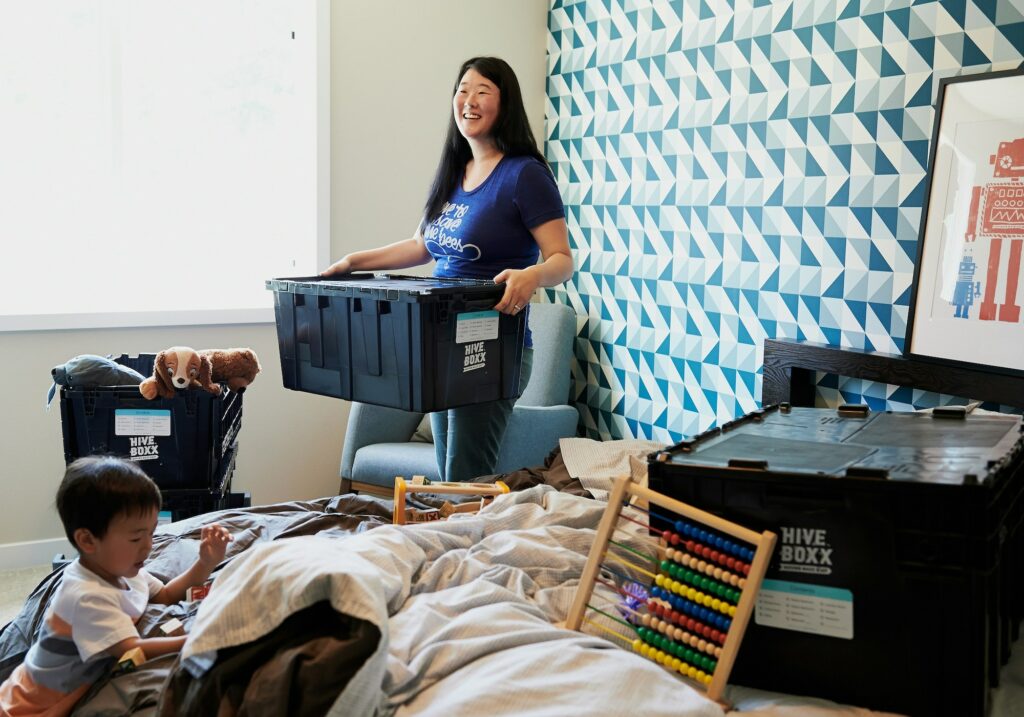
Source: Image by HiveBoxx, Feb 2022 on Unsplash – https://unsplash.com/photos/woman-in-blue-sleeveless-dress-sitting-on-bed-oM_2BIDTrjM
MoCs are relational experiences. People’s lives are “linked” to others, so changes in one person’s life can affect those they are close to (see Social Norms and Social Tipping Points). In addition, people may change their social networks during MoCs in ways that affect their uptake of behaviors. There is no one-size-fits-all approach to encouraging sustainable and low-carbon behaviors during such transitions. Interventions should be targeted to the values (see Values and Consumption), needs, and abilities of different groups, including those with high/low environmental concerns, men/women, high-/low-income groups, rural/urban residents, and homeowners/non-owners. The upscaling potential of MoCs is significant given the widespread experience of life transitions and destabilizing external events. MoCs are universal, deeply personal, and yet culturally diverse. Harnessing MoCs to accelerate the uptake of sustainable ways of living holds great promise.
Further Reading
Burningham, K., & Venn, S. (2020). Are lifecourse transitions opportunities for moving to more sustainable consumption? Journal of Consumer Culture, 20(1), 102–121. https://doi.org/10.1177/1469540517729010.
Kurz, T., Gardner, B., Verplanken, B., & Abraham, C. (2015). Habitual behaviors or patterns of practice? Explaining and changing repetitive climate-relevant actions. WIREs Climate Change, 6, 113–128. https://doi.org/10.1002/wcc.327.
Schäfer, M., Jaeger-Erben, M., & Bamberg, S. (2012). Life events as windows of opportunity for changing towards sustainable consumption patterns? Results from an intervention study. Journal of Consumer Policy, 35(1), 65–84. https://doi.org/10.1007/s10603-011-9181-6.
Thompson, S., Michaelson, J., Abdallah, S., Johnson, V., Morris, D., Riley, K., & Simms, A. (2011). ‘Moments of Change’ as opportunities for influencing behaviour. A report to the department for environment, food and rural affairs. New Economics Foundation and Defra, London. Available at: https://orca.cardiff.ac.uk/id/eprint/43453/1/MomentsofChangeEV0506FinalReportNov2011%282%29.pdf (accessed: 8 January 2025).
Verplanken, B., & Whitmarsh, L. (2021). Habit and climate change. Current Opinion in Behavioral Sciences, 42, 42–46. https://doi.org/10.1016/j.cobeha.2021.02.020.